Skip to content
Director of Product Management · CYNGN · 2017

The company that tried to take Android from Google, and ended up teaching cars to drive themselves.

I joined Cyanogen at the strangest moment in its life: right after it shut down the phone software that made it famous, and just before it told the world it had become a self-driving company. My job was the software that ran the vehicles.

2017Android OS → autonomous vehiclesDriveMod fleet consolegolf carts, Teslas, a port
www.cyngn.com/Dashboard
Pulau Brani
Keppel Harbour
T3
BD9
BL
EV 2453 DWELL
3 of 6 occupied
Terminal 3 Brani Lobby
Active EV
Designated stop
Support vehicle
Live route
500 m
DRIVEMOD FLEET CONSOLE · PULAU BRANI OPS VIEW · 2017
Before I arrived

Cyanogen started as a rebellion. CyanogenMod was a community-built version of Android, made by Steve Kondik in 2009, that grew to run on tens of millions of phones by giving people control the manufacturers would not. In 2013 it became a company, raised more than 110 million dollars, and set out to do something audacious: take Android away from Google. Its CEO told Forbes in 2015 they were “putting a bullet through Google’s head.”

They lost. The deals fell apart, the money ran out, and at the end of 2016 the company shut down the phone software entirely. The open-source project forked and walked away. What was left was a hundred-plus engineers, a war chest of hard-won expertise in making software run on other people’s hardware, and no product.

That is the company I joined.

2009rebel ROM
2013the company
2015"bullet through Google’s head"
2016the ROM is shut down
2017something new
2017 · Where I came in

A phone company, becoming a car company.

The bet was quietly brilliant: the same skill that let Cyanogen bend Android onto any phone could let it bend autonomy onto any vehicle. Take the sensors, the compute, and the software that make a car drive itself, and make them a kit you could fit to hardware someone else already built. They called it DriveMod. When I arrived in early 2017 the pivot was not yet public; that reveal came months later.

I led product for the part an operator actually touches: the console that watches a fleet of autonomous vehicles and keeps everyone around them safe. The design team had been let go in the cuts, so I ran design too, which is why the screens on this page are mine, drawn as well as specced. And because a company rebuilding a platform from scratch buys faster than it builds, I helped steer the acquisition of smaller startups whose technology we folded into DriveMod, deciding what to buy, what it would become inside the product, and how it fit the roadmap.

Product
The roadmap, and the fleet console an operator watches all day.
Design
The interface itself, after the design team was let go.
M&A + integration
Scouting acquired startup technology and absorbing it into the platform.
The work

Mission control for vehicles that drive themselves.

A self-driving fleet is only as safe as the person who can see all of it at once. The console I led is that view: a live map where every autonomous shuttle is a moving point, every route a drawn path, every stop a waypoint, and every rider a number that has to add up. Select a vehicle and you see exactly what it is doing, “EV 2453, three of six, en route Terminal 3, fourteen minutes, forty percent charge.” The rail beside the map answers the only two questions that matter in operations: where is everything, and is anything wrong. It had to stay calm and legible under real load, because someone would watch it all day while machines moved people around with no driver.

CYNGN
MapFleetMessagesHelp
OPS · PULAU BRANI
Pulau Brani
Keppel Harbour
Tanjong Pagar Terminal
T3
BD9
BL
22
EV 2453 DWELL
3 of 6 occupied
Terminal 3 Brani Lobby
Active EV
Designated stop
Support vehicle
Live route
500 m
EVFleet· Updated 1 min ago
Transportation
Pulau Brani
93 EVs Active
-7 (7%)
Designated Stops
Current Map View
11 Active
More Info
Users· Updated 1 min ago
268 Active Users
3964 Completed Trips
76%
EVEV 2453· Updated 1 min ago
Brani Dr 9en routeTerminal 3
Today at 3:30 PM
72 rides completed, Pulau Brani
T3BL
Terminal 3
Avg. wait time 3 min
Brani Lobby
14 min
Charge: 40%
Operator’s rule

The map is the product. Everything else is there to tell you the map is fine.

Pulau Brani
The same fleet, seen as flow
Proving it in the world

You cannot simulate your way to trust.

You test a driverless vehicle carefully, in the real world, or not at all. Three pilots, told plainly.

Pilot 01 · Palo Alto
Street-legal electric golf cart

Golf carts.

You do not start with a car at speed. You start slow and low-stakes. Out of our Palo Alto headquarters we tested on street-legal electric golf carts, the same class of vehicle Cyngn took a California permit to drive autonomously that year. Slow enough to be safe, real enough to be true.

Pilot 02 · Computer vision
Tesla Model S computer-vision testbed

Teslas and Jetsons.

To learn how the vehicle should see, we prototyped computer vision on Teslas, running the early deep-learning models on NVIDIA Jetson modules, the small embedded AI computers that were, at that exact moment in 2017, becoming the brains of self-driving prototypes. Teaching a car to recognize a person, a curb, a path, on hardware the size of a paperback.

Pilot 03 · Pulau Brani
Autonomous people-mover shuttle

People, not cargo.

The most interesting problem was a port. Singapore had automated much of its shipping, and with the cargo handled by machines, the biggest remaining source of injury was people, on foot, moving around enormous autonomous equipment. We began prototyping with the Port of Singapore on autonomous people-movers for Pulau Brani: shuttles that could carry workers safely through a yard built for robots. The fleet console was built to watch exactly that.

The Pulau Brani map in the console above is this last pilot’s record: the port, the terminals, the shuttle routes.

The data tool

The same system, turned into insight.

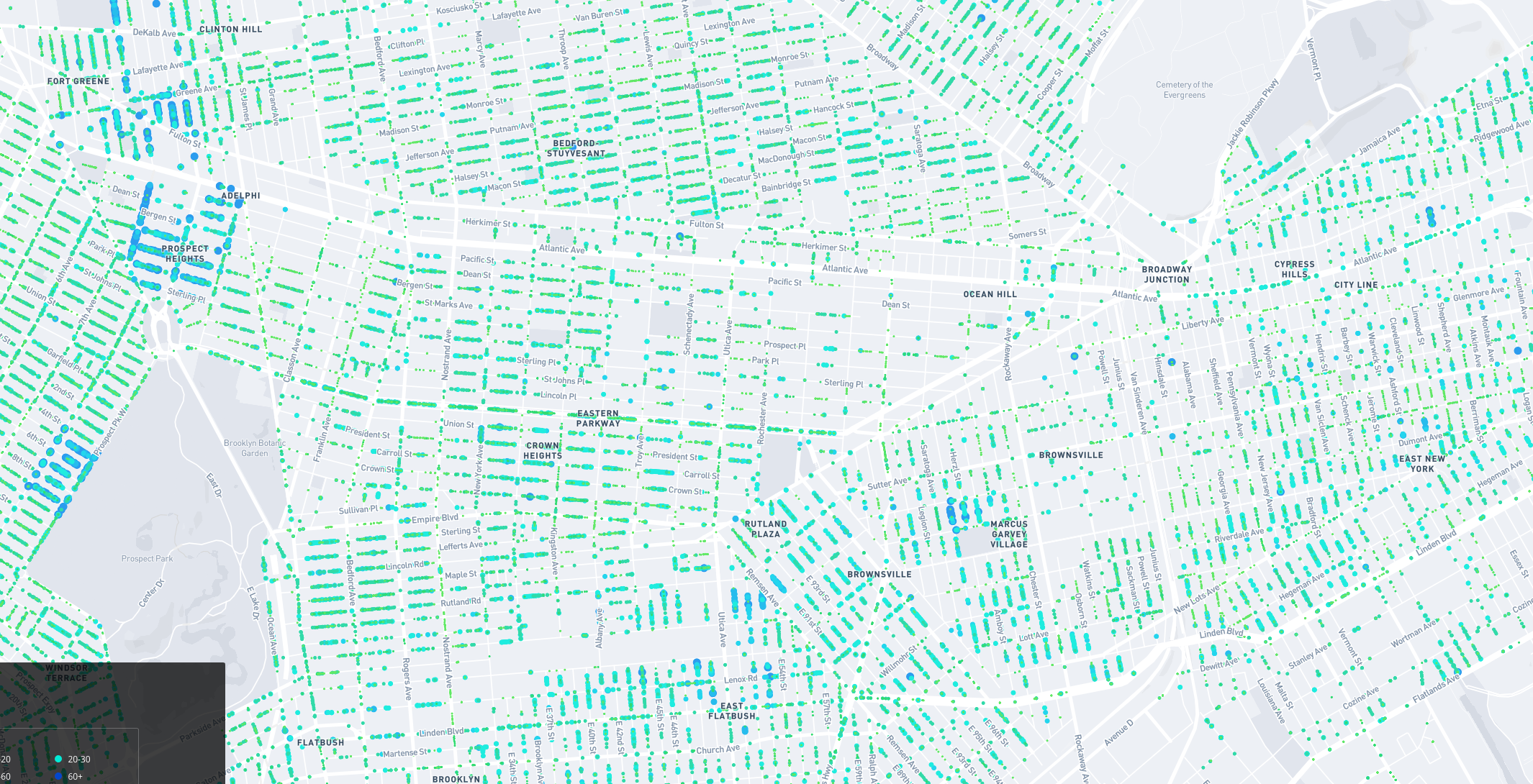
Alongside the live console I worked on a reporting tool that took the same language, the map, the status colors, the telemetry cards, and turned it toward data at rest: jobs, coverage, alerts, and city-scale patterns laid over a map. Live operations and after-the-fact insight, one visual grammar.

Active Jobs
1,208
Projects
86
Traffic (upload)
48 TB
Alerts
3
Active Vehicles in Service
4,676,764
Increase 23%
Red Light Violations
1,782
Decrease 4%
Avg Intersection Wait Time
1.2 minutes
Holding Steady
DASHI · DENSITY LAYERGRID 40.7128°N · 74.0060°W
City-scale density data laid over a street map
DASHI · ONLINE REPORT TOOL · CITY-SCALE PATTERNS OVER THE MAP
What happened next

The pivot worked.

I moved on later in 2017. Cyngn kept going. The company that could not win the phone found its footing in vehicles, took its self-driving story public that October, and in 2021 went public on the Nasdaq. Today it builds autonomous industrial vehicles, tuggers and forklifts that move material through factories and warehouses, for customers like John Deere. The rebellion that tried to take Android from Google became, of all things, a real autonomous-vehicle company. I was there for the turn.

Some companies get a second act by staying the same. This one got its by throwing everything out and keeping only what it was good at: making autonomy run on someone else’s machine.

Product management by Matthew Wardenaar · 2017Back to top